As a PM I get asked for visuals constantly: decks, campaign frames, "can you just mock this up." Image generators looked like a cheat code. Then I hit the wall everyone hits quietly.
Outputs wandered. Nothing felt like our brand. I was stuck in prompt, pray, disappoint, burn credits, wonder if I simply lacked the knack.
The turn was boring and useful. The problem was not "which generator." It was process. I stopped asking models to invent brand judgment on the spot. I built a way to de-risk the idea before anything hit generate.
Separate strategy from execution
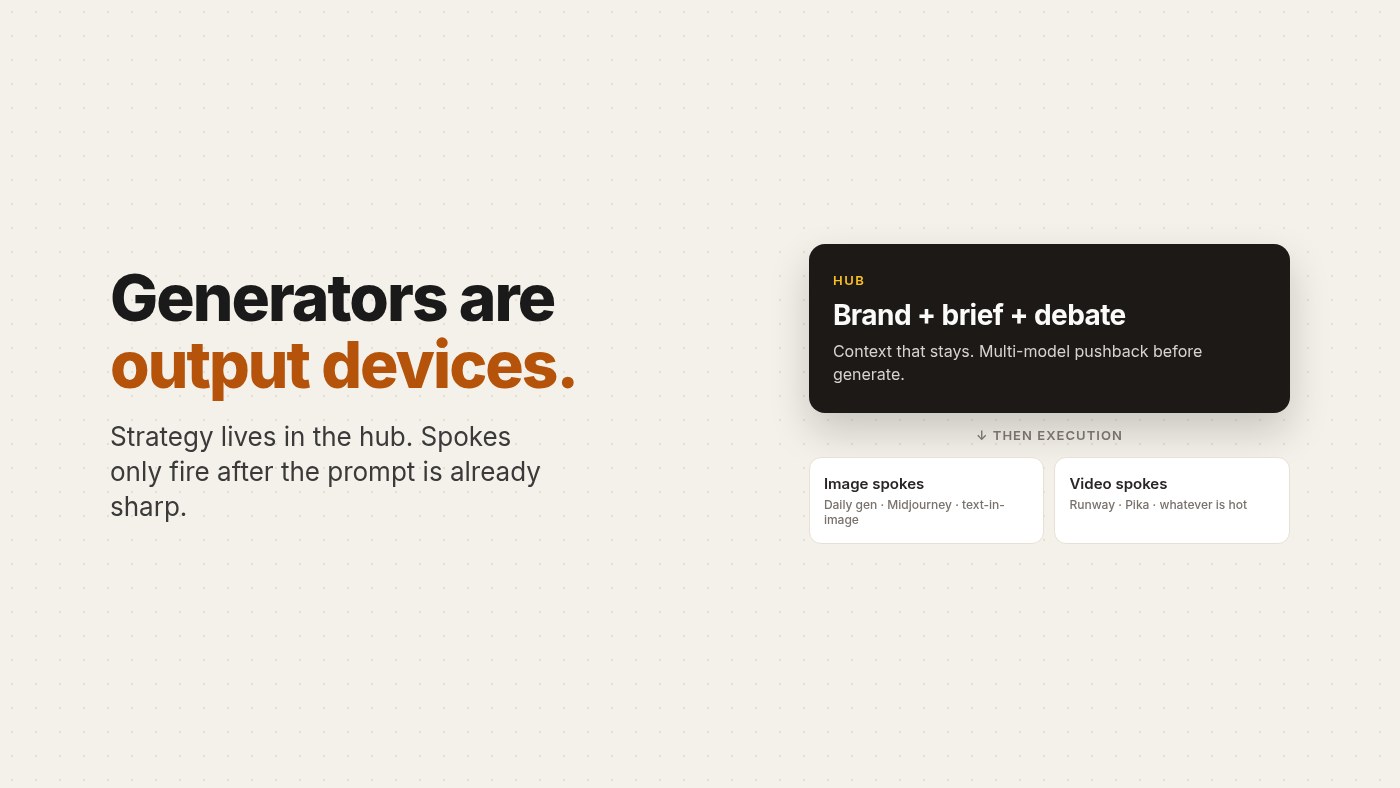
The shape I use now is hub and spoke. Get the prompt roughly right in a hub that already knows the brief. Only then send it to spokes that actually paint pixels or motion.
That sounds managerial. In practice it is one refusal: I will not open Midjourney cold with a half sentence and my gut.
The hub is a brain that keeps the brief
Generic chat windows forget. Every new tab wanted brand guidelines again, audience again, "what we already rejected" again. Exhausting, and a clean way to drift off-brand without noticing.
So I keep role-shaped assistants that already hold background. One I treat like a creative director sits on guidelines and past project notes. New ideas start from that floor, not from a blank system prompt and vibes.
If this rhymes with writing an employee handbook for AI teammates, it should. Persona and memory carry judgment. The model under them is just today's engine.
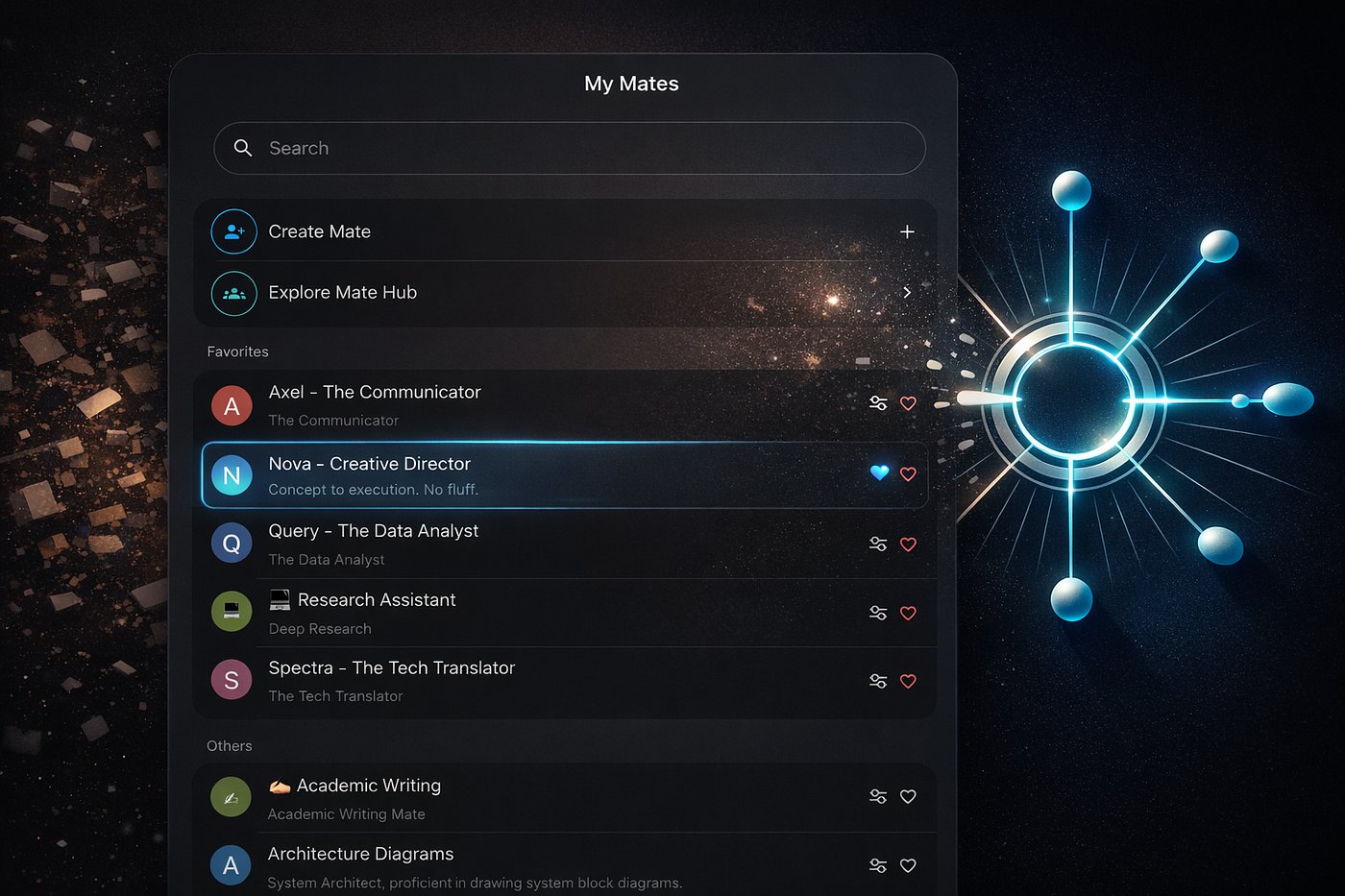
In my stack that hub lives in HaloMate because projects and assistants sit next to multi-model compare. The same separation works elsewhere if you actually keep one room for brief and debate. Product name is incidental. Amnesia is the enemy.
The gauntlet before any generate button
Rule I broke too often: trust the first draft prompt. I don't anymore. Core direction goes through at least two models before it leaves the hub.
My usual pressure set changes with the month, but the jobs stay stable. One model as creative wildcard. One as structure engineer that turns a concept into a prompt you could hand to a junior. One that pushes back instead of flattering. I merge what survives. That is the package the spoke gets.
Same habit as making models review each other, applied earlier in the funnel: disagreement is cheaper before you spend image credits.
Spokes are tools, not partners
I stopped hunting one "best" image or video model. I keep a flexible shelf.
Images. Day-to-day, conversational generators inside the big labs are fine for 80% of scratch work. When the frame needs art-director polish or a specific light, I still reach for Midjourney and pay the tax of learning its dialect. When the brief needs clean, readable type inside the frame, I send that job to a text-in-image specialist instead of arguing with a model that wants to invent logos.
Video. Consistency across scenes usually pulls me to one workhorse; quick playful tests go somewhere else. Names on that shelf move faster than this note will age. The point is routing, not loyalty.
Hub finishes the idea. Spoke executes with the right machine at the right time. That is the whole system.
Side proof: context is the product
I run the same pattern outside work. A long-lived parenting assistant knows routines and current obsessions for my twins. Christmas week I asked it for a short storybook script with them in it, then fed the script to an image model. The kids cared because the details were theirs, not because the generator was magically tasteful.
Same lesson as brand work. Output quality tracks context quality. Generators amplify whatever brief you already built or failed to build.
What I stopped doing
I stopped treating generators as creative partners. They are output devices with strong aesthetics and weak institutional memory.
Brainstorm, brand check, multi-model argument, and prompt craft belong upstream. Hit generate last. Fewer wasted credits. Fewer "why does this look like a different company" mornings. A loop you can repeat when the tool names on the spoke shelf swap again next quarter.
Stack notes decay on contact with the feed. Hub-and-spoke is the part I expect to still be true when the current image models are already embarrassing.
Takeaway
If your creatives feel random, audit process before you buy another subscription. Put strategy and memory in one place. Force a second brain on the prompt. Only then pick a spoke.
I still use whatever generator is sharp that week. I just refuse to let it invent the brief.